
Key points
- Since the start of the Iran war, Indonesia, Malaysia, Thailand, Singapore, Vietnam and the Philippines – major Southeast Asian economies – have introduced a total of 37 renewable energy and electrification policies and 29 fossil fuel policies.
- In the first six months of the war, crude oil was more volatile than 95% of all six-month periods since 2007, according to the crude oil volatility index, marking one of the most turbulent episodes for oil markets in nearly two decades.
- Our analysis found that the majority of the region’s new fossil fuel policies are short-term measures with implementation periods of less than six months, whereas most renewable energy and electrification policies focus on long-term change.
- The countries have introduced four times as many long-term renewable energy and electrification policies as fossil fuel policies – 24 renewables and electrification policies and just six fossil fuel policies.
- The Philippines leads in the total number of renewables and electrification policies released, at 13, while Singapore has introduced the fewest, at two.
Six months after the Iran conflict began, what has happened in Southeast Asian energy?
Southeast Asia has been one of the regions hardest hit by the energy crisis caused by the conflict in Iran. This is because many countries in the region are heavily reliant on fossil fuel imports, such as oil and gas, for power generation, especially the Philippines, Thailand and Singapore.
Oil and gas prices have risen sharply since the conflict disrupted key shipping routes. Japan Korea Marker (JKM) LNG prices, the benchmark price for LNG delivered to Northeast Asia, averaged USD 22 in August 2026, more than double the pre-war average of USD 10.8 in February 2026. This has led to a series of crippling economic impacts in the region, such as rising power prices and outages, higher subsidy bills, and strained national budgets.
This is the second energy crisis in five years. In 2022, the Russia-Ukraine war also led to historic LNG price spikes in Asia, resulting in an annual average price more than double the year prior. The high fuel prices seen in 2022 led to higher inflation and food prices for consumers in Asia, as well as surging subsidy bills for Southeast Asian countries, with Malaysia seeing a fourfold increase and Thailand seeing a deficit in its Oil Fuel Fund.
Countries have responded to the crisis by implementing a series of energy policies, ranging from short-term emergency measures such as fuel caps to more permanent policies such as increasing solar generation in the power mix. This review looks at the energy policies introduced since the start of the war in six Southeast Asian countries – Indonesia, Malaysia, Thailand, Singapore, Vietnam and the Philippines. These ASEAN-5 countries, plus Vietnam, represent the major Southeast Asian economies.
Volatile fossil fuels are a driver of repeated energy crises
The Iran crisis and disruption to the Strait of Hormuz have highlighted the volatility of the oil and gas markets globally. The IEA has declared the Iran crisis to be the “largest supply disruption in the history of the global oil market”.
New ZCA analysis uses the Cboe Crude Oil ETF Volatility Index (OVX) as a proxy to assess how the Iran crisis compares to past geopolitical crises on oil volatility.1The Cboe Crude Oil ETF Volatility Index (OVX) is a measure of a 30-day forward-looking expected volatility in crude oil prices that has been calculated since mid-2007. The expected oil price volatility is based on oil option pricing; it is one step removed from the oil price itself and is also different from the realised price volatility.
In the first six months, the Iran crisis was more volatile than 95% of all six-month periods since 2007, placing it among the most turbulent episodes in nearly two decades of oil markets.2This analysis was conducted in August 2026 and looks at the 6 months from February to July 2026 as the window for the Iran crisis thus far. The analysis was conducted from the recorded start of the OVX index, in 2007. There are 225 rolling 6 month windows starting from 2007, and given that adjacent windows share 5 of the 6 months, these are not independent draws. The baseline contains all events including other crisis periods so the comparison will cover all 6 month windows, not just those under normal market conditions.
When compared to specific 6-month windows pertaining to other crises, the Iran crisis pushed OVX more than Russia’s invasion of Ukraine and the 2008 financial crash, but less than COVID.3The log of the oil volatility index was plotted to show relative percentage changes. 4 dummies were selected to address key geopolitical crises affecting oil volatility from 2007 when the index began (2008 financial crash, covid, ukraine, iran) at 6 month windows. These are hand-picked so may be omitting other geopolitical events during this period that affected oil volatility. Given the OVX index itself is an implied volatility index, we are comparing the average level of implied volatility during each window.
Figure 1
Six major Southeast Asian countries have announced more renewable energy than fossil fuel policies since the war began
The six countries have released a total of 73 energy policies since the war began,4The total number of policies is less than the sum across all categories, as some policies pertain to several types of energy. Source: Global Renewables Alliance (GRA) et al. Global Energy Crisis Policy Monitor. In researching for this briefing, ZCA contributed to GRA’s tracker using the following sources: Rystad Energy Portal [accessed 08/19/2026]; IEA 2026 Energy Crisis Policy Response Tracker; The Philippines’ Department of Energy portal; the Ministry of Energy and Mineral Resources of Indonesia’s news archive; Vietnam’s Ministry of Industry and Trade’s new portal; Thailand’s Ministry of Energy portal; Singapore’s Ministry of Trade and Industry portal; and Malaysia’s Ministry of Energy Transition and Water Transformation. While we include policies/policy developments announced between 28 February and 31 August 2026, we note that some policies may have been in the pipeline before 28 February. with more focusing on renewable energy than on fossil fuels (Figure 2). The countries announced 37 renewable energy policies, compared to 29 fossil fuel policies.5These countries represent the major Southeast Asian economies – the ASEAN-5 plus Vietnam. Five biofuel policies and two nuclear energy policies were also released, counted here as separate categories.
Figure 2
Most fossil fuel policies are short-term, whereas renewable energy policies look to the long-term
Our analysis found that more of the renewable energy and electrification policies introduced since the war focus on long-term change, with implementation periods of roughly three years or more, while more fossil fuel policies focus on temporary measures, to be implemented in less than six months.6Short-term policies are interpreted as those with an implementation period of <6 months, while long-term refers to roughly 3+ years. This is based on the GRA Global Energy Crisis Policy Monitor 2026.
65% of the 37 renewable energy and electrification policies were long-term, with implementation windows of 3+ years, compared to just 21% of the 29 fossil fuel policies. There were four times as many long-term renewable energy and electrification policies as fossil fuel policies, at 24 versus six.
This suggests that renewables and electrification are seen as long-term solutions for future energy systems, while fossil fuel policies were primarily focused on temporary relief.
Figure 3
Who has introduced the most fossil fuel and renewable energy policies in the region?
The Philippines has introduced the most energy policies since the start of the conflict, with 22 in total, leading in both fossil fuel and renewable energy policies. This is likely due to its declaration of a national energy emergency on 24 March 2026. The declaration included a list of emergency relief measures, such as directly procuring oil and increasing government control over fuel prices, as well as longer-term steps to accelerate renewables, EVs and energy efficiency across all sectors.
Besides the Philippines, Vietnam and Thailand have released the most clean energy policies, at seven and six, respectively. Both countries have issued policies that aim to restructure the current energy system. For example, Thailand is approving several loan packages to support solar and EVs, while Vietnam issued a decree that allows data centres and EV charging stations to buy green power directly.
Indonesia also made one of the most significant announcements to boost renewables, announcing in March 2026 that it would add 100 GW of solar in the next three years.
Figure 4
Renewable energy and electrification measures range from new solar PV to EV expansion
Solar PV
Eighteen policies across the six countries focused on expanding solar capacity. For example:
- The Philippines fast-tracked at least 250 MW of solar capacity to the grid.
- Indonesia committed to installing 100 GW of solar in the next three years.
- Singapore raised its 2030 solar deployment target to 3 GWp.
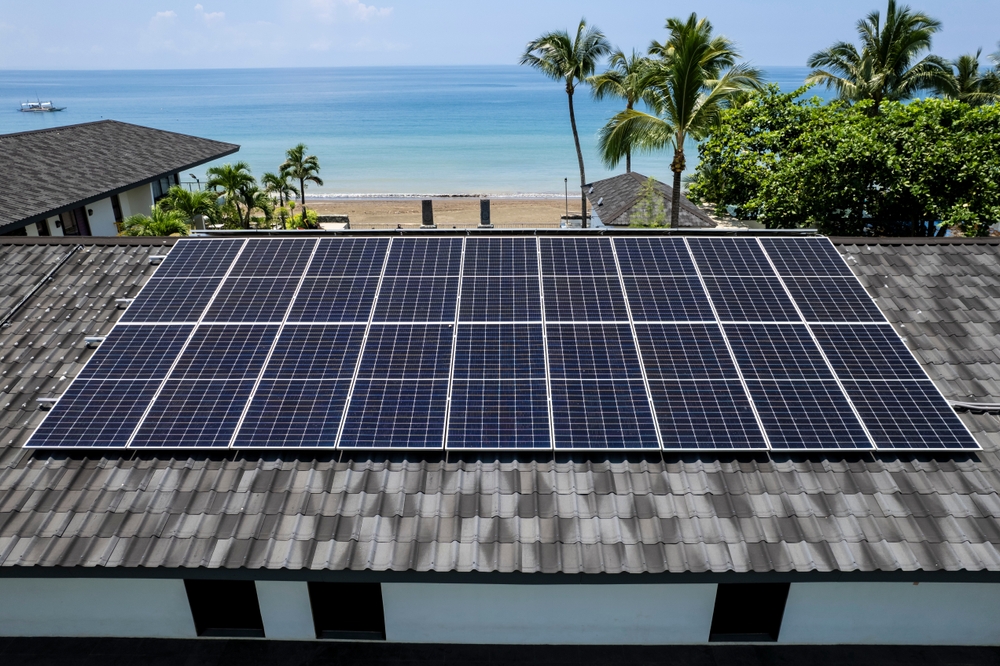
There was a particular focus on distributed renewable energy systems, like rooftop solar, with several countries releasing policies to lower costs:
- Both Thailand and Vietnam increased quotas for residential rooftop solar users to sell solar to the grid, with Thailand increasing its quota to 500 MW, and Vietnam allowing residents to sell up to 50% of solar output to the grid.
- The Philippines introduced low-interest loans for rooftop solar for government employees and shortened rooftop solar permitting processes for residential users, clinics, hospitals and medical facilities.
Storage
Seven policies focus on expanding storage to support renewable power, including:
- The Philippines Department of Energy (DoE) said in March it would require developers of new renewables projects to integrate energy storage systems in their plants.7This is an amendment to an existing policy: Department Circular No. DC2023-04-0008 or the Energy Storage Systems (ESS) Policy. The country is connecting 250 MW of solar and 450 MWh of battery storage to the grid, and announcing it would fast-track 1.471 GW of renewable energy and storage online by the end of April 2026.
- In July, Vietnam commissioned its first large-scale, grid-connected BESS in the capital with output capacity of 50 MW and 100 MWh of storage.
Transport
Six policies also focus on boosting electrification and EV adoption amid rising fuel prices. For example:
- The Philippines’ national energy emergency directive includes measures to expand EV adoption in mass transport.
- Thailand introduced a THB 400 billion emergency loan in July, half of which includes financing for longer-term transition measures, including the expansion of EVs and charging stations.
Green Power Purchases
Three policies refer to green power purchases, including:
- Vietnam expanded the government’s Direct Power Purchase Agreement (DPPA) rules to include high-consumption sectors such as data centres, EV charging stations and battery-swapping facilities. The updated rules allow these operators to buy renewable electricity directly from producers.
- Thailand launched Green Utility Tariff rates (UGT2), allowing all corporate buyers to buy renewable power from the grid, both directly and via renewable energy certificates, allowing companies to buy renewable energy directly from power producers even when the renewable facility is far from the point of end-use.
Fossil fuel measures include securing emergency fuel and managing price increases
Countries have released measures to secure emergency energy supplies. For example:
- Indonesia said it would reallocate 130 trillion rupiah toward energy subsidies, and started planning a long-term deal to import Russian crude oil in August.
- As part of its national energy emergency response, the Philippines set up a PHP 20 billion emergency fund to procure up to 2 million barrels of fuel to boost domestic supply in March, and followed up in July by establishing its first government-managed Strategic Petroleum Reserve (SPR) facility. A bill aiming to officially establish this facility was approved by the House Committee on Energy on 12 August.
- Vietnam ordered the accelerated development of a crude oil reserve, while Thailand increased mandatory fuel reserves.
In some cases, countries also moved to increase coal output:
- Thailand ordered the restarting of two decommissioned units at a coal-fired power plant.
- Indonesia worked on securing coal supply for PLN.
- The Philippines said it is looking to fast-track up to 5 GW of new coal capacity, and Vietnam said it was considering building more coal plants.
Policies also include measures to lower vehicle fuel costs, like fuel subsidies, fuel price regulations and financial support for transport workers – one of the groups most impacted by rising fuel costs:
- The Philippines’ DoE said it would regulate adjustments in pump prices as part of the national energy emergency, and provide fuel subsidies for bus, taxi, delivery and ride-hailing drivers, and transport workers.
- Vietnam similarly reduced domestic fuel prices through the Fuel Price Stabilisation Fund, while Singapore rolled out a SGD 1 billion relief package, with some of that money going to support transport workers.
- Almost all of the countries, including Indonesia, Malaysia, Thailand and Vietnam – introduced policies that mandate blending diesel with biofuels, such as palm oil or ethanol.
How is implementation progressing?
We assessed progress in the countries that have released the highest number of policies – the Philippines, Vietnam, Thailand and Indonesia.
The Philippines
The Philippines introduced at least seven solar power policies since the start of the war. For example, the proposed Sariling Kuryente Act aims to make solar and battery energy storage system installation easier for households by removing permitting requirements and utility-applied charges, while the DoE fast-tracked net metering applications to help lower power bills.
These measures align with the Philippines’ overall ramp-up of solar in the past year: during the first five months of the war, the Philippines imported more than double the amount of solar capacity from China compared to the same period last year.8Between March and July 2026, Philippines imported 9523.04 MW of solar wafers, cells and panels from China compared to 4076.21 MW between March and July 2025.
As for the government’s 1 April 2026 DoE announced that it would bring 1.47 GW of renewable energy and storage online by the end of the month. This goal was achieved, largely thanks to the Meralco Terra project, the ‘world’s largest integrated solar and battery storage facility’, adding 750 MW to the grid in mid-July.
Nearly a month after its initial release in March, the Ginhawa Solar Energy Loan had reached PHP 5.7 billion in applications.
The DoE said in mid-August that the fuel subsidy for public utility vehicles, first implemented as part of the national energy emergency declaration, will continue until the end of the year due to continued volatile fuel prices.
Vietnam
In Vietnam, rooftop solar companies reported that demand for consultations had increased significantly since June, after a new decree allowed rooftop solar systems to increase their sales of excess solar power to Vietnam Electricity (EVN).
However, several of the policies that either saw updates or moved toward further implementation were related to regulating fuel prices. As of September, the Ministry of Industry and Trade set out regulations on moving funds from the state budget to the Fuel Price Stabilisation Fund, which was first introduced in March to control fuel prices. The temporary tax cuts on petrol and oil, first rolled out in April, were also extended another three months until September 30.
By mid-year, the country had started preparations on the Ninh Thruan 1 and 2 nuclear power projects, such as covering land clearance and approving cost estimates.
The country also rolled out its mandatory 10% ethanol blending requirement in gasoline across all urban areas in August.
Thailand
Currently in its draft stage, the latest Power Development Plan – the country’s national energy plan – sees 89% clean electricity share by 2050 in one of its scenarios as of September. There are currently four scenarios under consultation.
In July, the Constitutional Court ruled that the government’s 400-baht emergency loan decree, which includes both immediate relief measures and structural energy transition initiatives like expanding clean energy and EVs, is constitutional, including provisions for longer-term energy transition initiatives. This means the government can proceed with the plan.
To respond to public demand for rooftop solar, the government has introduced a series of solar measures, such as raising the net billing rooftop solar quota from 100MW to 500MW in April.
Thai Ministries are assessing the feasibility of expanding the initiative to aid 1 million households to install rooftop solar through a THB 50,000 loan to 1.5 million households, expected to launch in mid-October. This is part of the THB 200 billion (USD 6.1 billion) loan package for the energy transition, including rooftop solar for villages. To make headway in the first phase of 500,000 households, state-owned utility operators MEA and PEA are accepting rooftop solar installer and equipment registrations.
Indonesia
Indonesia’s plan to bring online 100 GW of solar has made significant progress. The plan has been included in the latest revision of the General Plan for Electricity Supply (RUPTL), according to the Ministry of Energy and Mineral Resources. There is momentum towards this 100 GW target, with the first phase consisting of 14 plants in six provinces across Indonesia already launched as of August, representing a total capacity of 5.3 GW. Some of these projects were listed under the Just Energy Transition Partnership (JET-P), such as the Saguling (92-MWp) project.
Indonesia’s EV incentive package is also on track, with Finance Minister Purbaya Yudhi Sadewa announcing in August that the incentives would be available starting around Q3 2026. The package would cover value-added tax exemptions of up to 100% percent for certain EV purchases, and would cover 500,000 electric motorcycles and cars.
As of August, the country is also considering more targeted fuel restrictions, such as future restrictions on purchases of subsidised Pertalite, a RON90 petrol, for households in the top 20% of income groups.
As the region looks to renewables, grid modernisation will be key
These findings indicate that governments of Southeast Asian countries, many of which have abundant renewable energy resources, are looking to renewables and electrification as the long-term solution to fossil fuel-related power crises.
Faced with one of the most volatile oil market episodes in two decades, there is short-term pressure for emergency relief and to increase fuel reserves. Despite this, renewables are increasingly being seen as the solution for resilient future energy systems.
Alongside supporting future renewable energy build-out, prioritising grid modernisation will be key to ensure that transmission and distribution infrastructure in domestic and cross-border systems can efficiently and flexibly absorb growing renewables capacity. Key grid modernisation technologies include battery energy storage systems, interconnectors and smart meters.
This analysis provides a regional snapshot of data from the Global Renewable Alliance (GRA) Global Energy Crisis Policy Monitor 2026, which is updated by the GRA and partners.