Key points
- Germany’s manufacturing sector – a key pillar of its economy – relies heavily on imported critical minerals, making it vulnerable to supply disruptions.
- The automotive industry, including its rapidly expanding EV sector, is highly exposed to supply-chain insecurity due to near-total reliance on imported minerals and concentrated sourcing.
- Climate change will compound these vulnerabilities, with heat stress and drought projected to expose significant shares of global bauxite, copper and lithium production to climate risks by 2050, increasing the likelihood of bottlenecks and production disruptions.
- Climate change-caused disruptions to Germany’s global supply chains have the potential to reduce GDP by 0.01–0.35% annually by 2050 through impacts on trade, transport, labour productivity, infrastructure, raw materials and energy.
- Adaptation finance is critical to safeguarding supply chains against these rising risks, but current levels are insufficient.
Germany relies heavily on imported intermediate goods, particularly for strategic exporting sectors
Over 90% of Germany’s raw materials supply is imported, according to figures from the German Institute for Economic Research. The OECD reports that many of the country’s most innovative firms are heavily reliant on global supply chains and has associated Germany’s increasing participation in supply chains serving high-tech industries in the early 2000s and 2010s with employment growth and income inequality reduction above the OECD average at the time.
Germany imports 39 of the 46 most relevant raw materials needed to achieve strategic targets in its energy and industrial policy, according to a 2022 report published by the Ministry of Economic Affairs. The manufacturing industries most dependent on imported intermediate inputs were ICT and electronics (62.4%), chemicals and chemical products (60.5%) and basic metals (58.8%). High levels of dependency exist across many other industries, particularly motor vehicles and transport, according to the OECD.
Germany’s manufacturing sector supports a large share of the economy, employing around 7.3 million people in 2025. The sector, dominated by the automotive, mechanical engineering, chemical and electrical industries, generated nearly one-fifth (19.5%) of national gross value-added in 2024.1This compares to 10.6% in France and 17.5% in the US. The German Federal Statistical Office reports that manufacturing is the second-biggest part of the economy by value of sales, with turnover of around EUR 2.5 trillion in goods in 2024.2The contribution of the manufacturing sector to the German economy is second only to wholesale and retail trade by value.
Foreign final demand – reflecting demand for German production ultimately consumed or invested abroad – accounted for over 80% of domestic value added in certain manufacturing industries, including 82.5% in ICT and electronics and 80.4% in pharmaceuticals in 2022, compared with 31.7% across the German economy as a whole.
Raw material imports also play an important role in German exports: according to a 2026 OECD report, the foreign content of Germany’s exports reached nearly 26% in 2022.3Compared to the OECD average of 30%. The automotive sector is where these two trends coincide most strongly. Motor vehicles provided the second-largest domestic value-added content in 2022 (9.3%) and the largest share of foreign content in total exports (4%).
Supply chain risks to high-value-generating raw materials, including critical minerals and rare earth elements, would disrupt Germany’s economy
Alongside the benefits Germany accrues from its manufacturing sector, the global integration of the supply chains serving it also raises risks of foreign materials insecurity. Disruptions would have a knock-on impact on production and the wider economy.
The Federal Ministry for Economic Affairs and Climate Action emphasises that, due to indirect cascading effects, the full macroeconomic costs of a supply disruption are far larger than just the direct costs to firms, and therefore securing supply is part of the remit for economic policy. This is particularly true for critical mineral inputs, including rare earth elements (REEs), gallium, germanium and nickel, which raise value creation in high-tech manufacturing, automotive and clean energy sectors. A stable supply of these critical and strategic minerals is indispensable for Germany’s decarbonisation.
A 2026 study by the International Monetary Fund (IMF) finds that REE inputs in manufacturing make up 2.5% of Germany’s nominal GDP.4Germany is significantly more dependent on REEs than the US (0.8% of GDP) or France (0.4%), making it more exposed to risk. If REE imports were to fall by 80%, Germany’s real GDP would contract by up to 2.1%, according to the IMF report modelling. The impact would be particularly high on the automotive sector, reducing production by nearly 6%.
Further, McKinsey reported in 2025 that the failure of the largest supplier of rare earths would threaten 4 million jobs and EUR 370 billion in value creation in Germany – 9% of Germany’s total GDP – particularly in automotive, aerospace and renewable energy.
The automotive industry, particularly electric vehicles, faces risks of supply chain insecurity
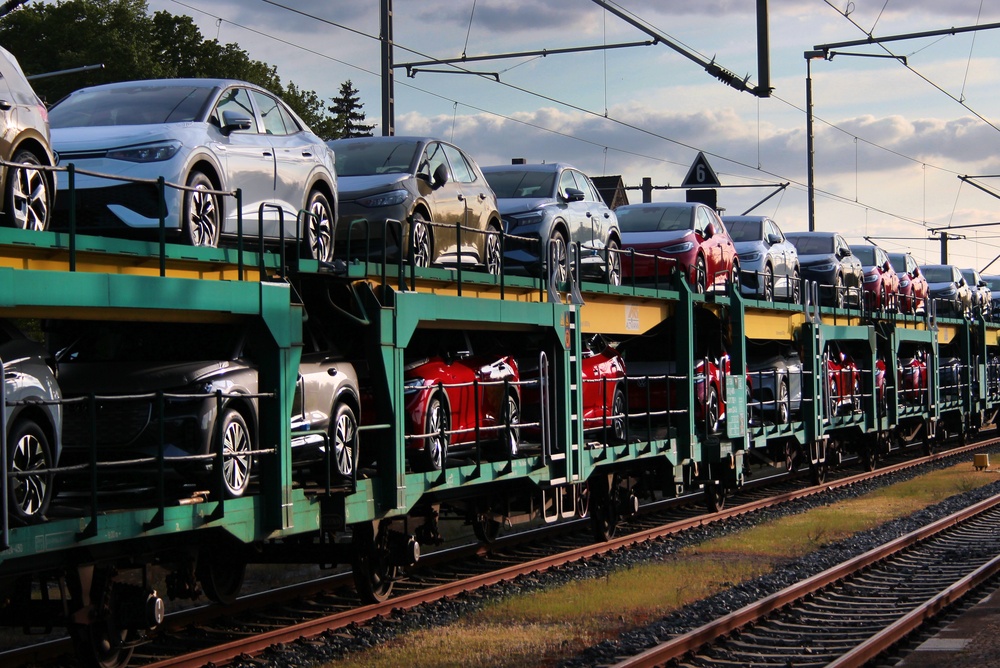
Germany is the top global exporter of cars by value.5Observatory of Economic Complexity, 2024. According to Germany Trade and Invest, the automotive industry alone generated EUR 528 billion in revenue in 2025. Motor vehicles and motor vehicle parts were Germany’s most important exports in 2025, accounting for 16.2% of the total.
Electric vehicles (EVs) are becoming increasingly important in the sector. Germany is the second-largest production location for EVs globally, and domestic plants are being converted to EV production.6Page 22. According to Marklines, EV production in Germany has grown from around 146,000 vehicles in 2020 to around 1.2 million in 2025.7Production data from Marklines, accessed 9 October, 2026.
Growth in the EV segment is likely to be important to offset some of the decline in the internal combustion (ICE) market. A 2026 study finds that the EU’s share of global ICE-related value added is projected to fall from 28% in 2020 to 12% by 2032, but that localisation of battery manufacturing in the EU could be the strongest lever to recover this lost value – provided production can satisfy around 80% of battery demand.
Like manufacturing more broadly, the raw material supply chains supporting this industry are increasingly at risk. Industry experts are signalling warnings, with manufacturing consultancy Seraph Group reporting in April 2026 that deteriorating supply chains threaten the German automotive industry.
A 2026 study found that Germany’s automotive industry is among the most dependent on REEs, making it most exposed to associated supply chain risks. According to the study, 54% of Germany’s vehicle manufacturing is dependent on critical raw materials.8Based on 2022 data. Further, automotive alone represents 46% of all German manufacturing employees whose jobs depend on REEs.
Domestic minerals account for nearly none of the raw ores required to sustain production in Germany’s automobile industry (Table 1). Of these critical mineral imports, China holds a near-monopoly on several, including REEs, unwrought magnesium and ferrotungsten. This single-source dependence has already caused issues in the automotive industry. In 2025, Chinese export restrictions on REEs triggered industry warnings of production delays or outages.
Table 1
Climate impacts will put increasing pressure on already insecure automotive supply chains
Climate risks are increasingly relevant to automotive and EV supply chain security. PwC assesses climate risks to various commodities under high- and low-emissions scenarios, including three critical automotive materials – bauxite, copper and lithium (Figure 2). The study finds that a large share of global production of these commodities will be exposed to significant, high or extreme climate risks by 2050 due to heat stress and drought.
Drought is a key risk for copper and lithium, whereas bauxite is more at risk from heat stress, with the amount of production facing heat stress increasing from 47% in 2020 up to 62% in a low-emissions scenario and 65% in a high-emissions scenario – resulting in productivity declines.
Figure 2
Exposure to trade-related climate risks accumulates through various avenues, including:
- Disruption to transport and logistics, including shipping, ports and container terminals;
- Heat-induced labour productivity losses, amplified by increased spread of diseases in climate-vulnerable sourcing regions, forced migration or public unrest;
- Damage to processing facilities and industrial infrastructure;
- Shortages in raw materials and energy, including in mining and refined materials; and
- Potential policy changes, such as carbon taxes.
As climate impacts increasingly affect mining and processing regions worldwide, it may become harder to diversify supplies, especially during short-term supply crunches. For example, a 2020 study found that 65% of total global lithium resources, inclusive of projects in advanced exploration, prefeasibility, scoping and feasibility stages, are in medium to very high water risk areas.9This study also found that 70% of cobalt and 84% of platinum resources will face high to very high ESG risks, inclusive of physical and extreme weather hazards and water supply. It does not specify the extent to which these climate risks are embodied in this calculation relative to other factors.
The risks to the automotive sector are part of wider supply chain risks. A report commissioned by Germany’s Environment Agency in 2021 to examine the potential impacts of global climate change on the German economy through foreign trade flows finds that climate change-induced disruptions outside Europe would have a much greater impact on the German economy than climate-change disruptions within Europe due to the greater severity of climate vulnerabilities for its key trade partners for imports. The global consequences of climate change impacts that reach Germany through its global supply chains and trade relationships could lead to a decrease in Germany’s GDP between 0.01% and 0.35% a year by 2050.10Relative to a scenario without climate change. This estimate is conservative, as the study only considered sea level rise, heat-related losses in labor productivity and changes in agricultural yields. Considerable impacts lay outside this scope, including geopolitical risks, health, migration and insurance markets, as well as indirect transition risks stemming from transition policy spillovers, including those associated with the EU’s Carbon Border Adjustment Mechanism (CBAM), and supply chain bottlenecks triggered by shifts to low-carbon technologies.
Scenario analysis by the Atlantic Council for US critical minerals supplies found that traditional tools to manage supply chain risks are unlikely to be effective against climate risks. Specifically, the report identified that traditional emergency toolkits for managing supply crunches, including stockpiles, export controls and financial incentives, will become less effective as climate change-induced disruptions lengthen supply shortages.
Climate finance can be a lever for safeguarding global supplies of critical minerals, but levels fall short of needs
The German Environment Agency notes that while economic resilience can be supported through increased trade diversification, these efforts “must be accompanied by targeted support for adaptation measures in the most severely affected regions of the world that are important to Germany with regards to imports and exports and cannot be easily replaced.”
The Atlantic Council analysis recommends scaling preemptive finance and financial de-risking for climate adaptation, particularly to support smaller firms. It highlights that adaptation is essential to mineral security, further stating that “without a policy framework that incentivises and supports adaptation across the whole supply chain, national security and industrial priorities remain at the mercy of disaster-driven shocks.”
However, climate adaptation financing in developing countries is insufficient in all areas. In developing countries where many mineral exploration and mining sites are located, annual adaptation financing needs are up to 18x greater than international public finance flows, according to a 2024 report from the World Bank’s IFC. This puts a burden on domestic public finance and private companies to fill this gap, despite insufficient finances to do so.
Guinea, for example, supplies nearly 98% of Germany’s bauxite, the main ore used to produce aluminium. The material plays an essential role in vehicle lightweighting – critical for bringing down emissions in internal combustion vehicles or compensating for heavy batteries in EVs. Guinea’s adaptation needs have been calculated at USD 8.4 billion between 2026 and 2035, a goal that explicitly requires increased and predictable international financing support.
Germany participates in multilateral financing programmes, but is not meeting its climate finance pledges
Germany has provided funding for the World Bank’s Climate-Smart Mining facility (CSM), part of Extractives Global Programmatic Support, which includes a stated goal of supporting adaptation through knowledge products, technical support and capacity building, and investment facilitation.
The EGPS’s 2025 annual report states that funding has been allocated to a few adaptation-related projects, including a grant in Argentina to improve water management in lithium extraction, and two knowledge products: Building Climate Resilience in the Mining Sector and the Mining Sector Diagnostic.
Overall, however, Germany’s funding for critical climate investments overseas is shrinking. Analysis of the 2027 budget by non-governmental organisations shows the government is expected to fall EUR 1 billion short of its development climate finance pledges. Reversing this trend and expanding adaptation finance is essential to manage unmitigated global climate impacts. Doing so would also help protect trillions of euros in goods and millions of jobs in the domestic economy.