
Key points:
- The term ‘bioeconomy’ refers to the use of natural resources to support economic growth, environmental health and social well-being. It includes activities that deliver finance and those that do not, such as the implementation of policies for conservation of nature.
- Bioeconomy is a broad term with different interpretations, some focusing on developing biotechnology and scaling up bio-product value chains, and others prioritising environmental sustainability and social equity.
- The bioeconomy has been positioned as a way to channel much-needed finance to protect nature, while also meeting sustainable development targets. However, if the concept remains poorly defined it could be misappropriated and worsen existing inequities.
- The concept has received more attention at national and international levels in recent years, as governments grapple with how to bring economic growth to biodiversity-rich but fiscally poor regions.
- Brazil is leading the charge: in December 2023 Brazil launched the Initiative on Bioeconomy (GIB) as part of their G20 presidency, which aims to create overarching principles to guide global work on the bioeconomy.
- The Brazilian Bioinnovation Association (ABBI) calculates that “the implementation of new technologies linked to the bioeconomy” could generate USD 592.6 billion per year in Brazil by 2050 and reduce the country’s emissions by 29 billion tonnes CO2eq between 2020-2050 – equivalent to a 65% reduction in emissions compared to current levels.
- Examples of successful initiatives give an idea of what investing in the bioeconomy could look like, such as projects that share the benefits of genetic materials and provide payment for ecosystem services, like the protection of forested areas.
What is the bioeconomy and what is its value to the global economy?
- There are three main approaches to understanding the bioeconomy.
- Experts estimate the bioeconomy will be worth a third of global economic value by 2050.
In its most fundamental sense, the bioeconomy is the interaction between nature and society: the dependence of people, the economy and society on biodiversity, and the impacts of human activities on biodiversity. The term refers to the use of natural resources to support economic growth, environmental health and social well-being, including activities that directly deliver finance, such as via funds, and those that do not, such as the implementation of policies for the conservation of nature.
The global bioeconomy is currently estimated to have a total value of USD 4 trillion, according to the World Bioeconomy Forum, with some projections calculating that the value will increase to USD 30 trillion by 2050 – equivalent to “a third of the global economic value.”
The bioeconomy is a broad concept with varying interpretations in different contexts. A review of academic literature identified three main approaches:
- The biotechnology approach aims to create economic growth and new jobs through research, innovation and commercialisation of biotechnology. ‘Biotechnology’ refers to products and services that use biological processes. For example, using genetic engineering and other biotechnological approaches to develop vaccines, pharmaceuticals, new crop varieties and other bio-based materials, such as biofuels and biodegradable materials.
- The bio-resources approach aims to innovate products based on biological raw materials and scale up biomass-based value chains for economic and environmental benefit. Here, the focus is more on developing new technologies and less on delivering positive environmental impact.
- In the bio-ecology approach, sustainability is the primary concern, above economic growth and job creation. This approach aims to address ecosystem health and sustainability issues by, for example, prioritising the protection of biodiversity and implementing circular systems and agroecological practices that benefit local and rural economies.
Countries are increasingly implementing bioeconomy policies to encourage sustainable development
- Policies to support growth of the bioeconomy have been implemented in China, the US, India and the EU.
- Development bodies warn that prioritising economic value may come at the expense of equity and note the divergence of policies in the Global North versus the Global South.
Although the concept of a bioeconomy is not new, it has recently gained more traction. Already, at least 50 countries have put in place a national bioeconomy strategy or policies to develop a sustainable bioeconomy. A 2024 position paper from The World Bioeconomy Association and World BioEconomy Forum to EU Member States highlights that the area has “witnessed dynamic shifts” since 2022.
China adopted its national bioeconomy strategy in 2022 to boost economic growth by 2025 predominantly via innovation in biotechnology. The government reports that China’s biomedical market is expected to exceed RMB 800 billion (USD 112 billion) by 2025, with an annual growth rate of more than 20%.
The US updated its strategy through an executive order on bioeconomy that focuses on biotechnology and biomanufacturing and aims to support climate and energy targets, and improve food security while contributing to economic growth.
The Indian government released a report which found that the Indian bioeconomy grew by 14.1% from 2020 to 2021, and was valued at USD 80.12 billion in 2021. The production of medical products from biological sources (‘BioPharma’) accounts for almost half of the share of the bioeconomy in India, for example, through the development and manufacturing of vaccines.
Each country has its own interpretation of bioeconomy which translates to different strategic priorities. While the focus in China, the US and India has been on developing biotechnology, the EU’s bioeconomy strategy, which has been in place since 2012, focuses more on bioresources and bioecology, which prioritises the sustainable use of natural resources and is closely associated with the circular economy.
The Inter-American Development Bank warns that approaches to the bioeconomy that prioritise economic growth and biotechnology, which often come from North America, Western Europe and bodies such as the OECD, are not necessarily shared with – or appropriate for – all regions. The report finds that in the Amazon region, understandings of the bioeconomy are focused on sustainability and equity, particularly for small-scale farmers, Indigenous peoples and local communities. These different interpretations between potential funders in the Global North and countries in the Global South “could impede access to vital investment, funding and support.“
Brazil leads the bioeconomy push to support sustainable development and environmental targets
- Forested countries are often not fairly compensated for their roles in conserving these vital natural resources. Developing the bioeconomy in a way that supports economic growth and protects nature has been proposed as a solution.
- Brazil is a leader, using both national policies, domestic organisations and its role as the G20 presidency to advance its bioeconomy and protect the Amazon.
Brazil has been leading much of the recent focus on bioeconomy. The Brazilian Bioinnovation Association (ABBI) calculates that “the implementation of new technologies linked to the bioeconomy” could generate USD 592.6 billion per year in Brazil by 2050 and reduce emissions by 29 billion tonnes of CO2eq between 2020 and 2050 – equivalent to a 65% reduction in emissions compared to current levels.
The report also found that practices that promote bioeconomy could recover 117 million hectares of degraded land in Brazil. Achieving Brazil’s target of recovering 12 million hectares of deforested land by 2030 would create more than five million jobs “from the implementation and management of forest areas”, according to a study from Brazilian sustainable development think tank Instituto Escolhas.
For Brazil and other countries with forest-based economies, growing the bioeconomy is seen as a way to meet both sustainable development and environmental targets. Investment in the bioeconomy has also been positioned as a solution to finance the protection of nature.
This potential is particularly important for those in forest-based countries who are not fairly compensated for their role as stewards of the environment and biodiversity – the countries that are home to the Amazon capture just 0.17% of the global bioeconomy market’s potential. The need for funding is becoming even more relevant as the future of other nature-based revenue streams, such as credits from carbon offsetting projects, is becoming more uncertain following increasing scrutiny.
Brazil uses G20 presidency and national policies to promote bioeconomy development and attract investment for the Amazon
As the 2024 president of the G20, Brazil launched the Initiative on Bioeconomy (GIB) in December 2023, which aims to agree on a set of overarching guidelines, or “High-Level Principles”, on how the bioeconomy should be implemented. The proposal will be discussed by G20 members to define what sorts of activities fall under the bioeconomy. If an agreement is reached, the principles will feature in the final declaration by G20 leaders when they meet in Rio de Janeiro in November 2024.
Brazilian President Luiz Inácio Lula da Silva aims to use the GIB initiative to attract investments into the bioeconomy. At a meeting in Belém in March 2024, Lula and French President Emmanuel Macron launched an investment plan to raise 1 billion euros (USD 1.08 billion) in public and private investments over the next four years for the Amazon, including parts of the rainforest in neighbouring French Guiana. The fund represents efforts to ramp up investment in the bioeconomy and will be financed by state-run Brazilian banks and France’s investment agency, alongside additional private resources.
Brazil also recently announced a decree to define a national Bioeconomy strategy, which defines bioeconomy as a model for production and economic development “based on values of justice, ethics and inclusion” and involving “the sustainable use, regeneration and conservation of biodiversity, guided by scientific and traditional knowledge.”1Translated from original: “Para fins do disposto neste Decreto, considera-se bioeconomia o modelo de desenvolvimento produtivo e econômico baseado em valores de justiça, ética e inclusão… com base no uso sustentável, na regeneração e na conservação da biodiversidade, norteado pelos conhecimentos científicos e tradicionais e pelas suas inovações e tecnologias…” The decree sets out the creation of a National Bioeconomy Commission, which was due to draft a National Bioeconomy Development Plan in September 2024.2The Decree, published on 5 June 2024, states that the National Bioeconomy Commission will be created within 30 days of the publishing of the Decree, and that the National Bioeconomy Development Plan will be drawn up within sixty days of the establishment of the National Bioeconomy Commission. This means the National Bioeconomy Development Plan was due to be drafted by September 2024. Priorities for action include:
- encouraging activities that promote sustainable use and conservation of ecosystems, including the sustainable management of forests, regenerative agriculture and biomass production;
- expanding innovation, bioindustry and professional training;
- reducing inequalities and upholding Indigenous rights.
Prioritising profit over people and the environment within the bioeconomy risks worsening inequality and nature degradation
- The rights of communities and groups directly responsible for protecting nature must be at the forefront of bioeconomy development and decisions.
Growing the bioeconomy could present a way to support people and nature, but the concept also has the potential to be misappropriated and exacerbate other issues, such as existing inequities and environmental degradation. Currently, the proposed High-Level Principles on Bioeconomy lack details that will need to be defined if they are to be adopted by the G20. This must be done in a way that prioritises the rights of those directly responsible for the protection of nature, including local communities and Indigenous people.
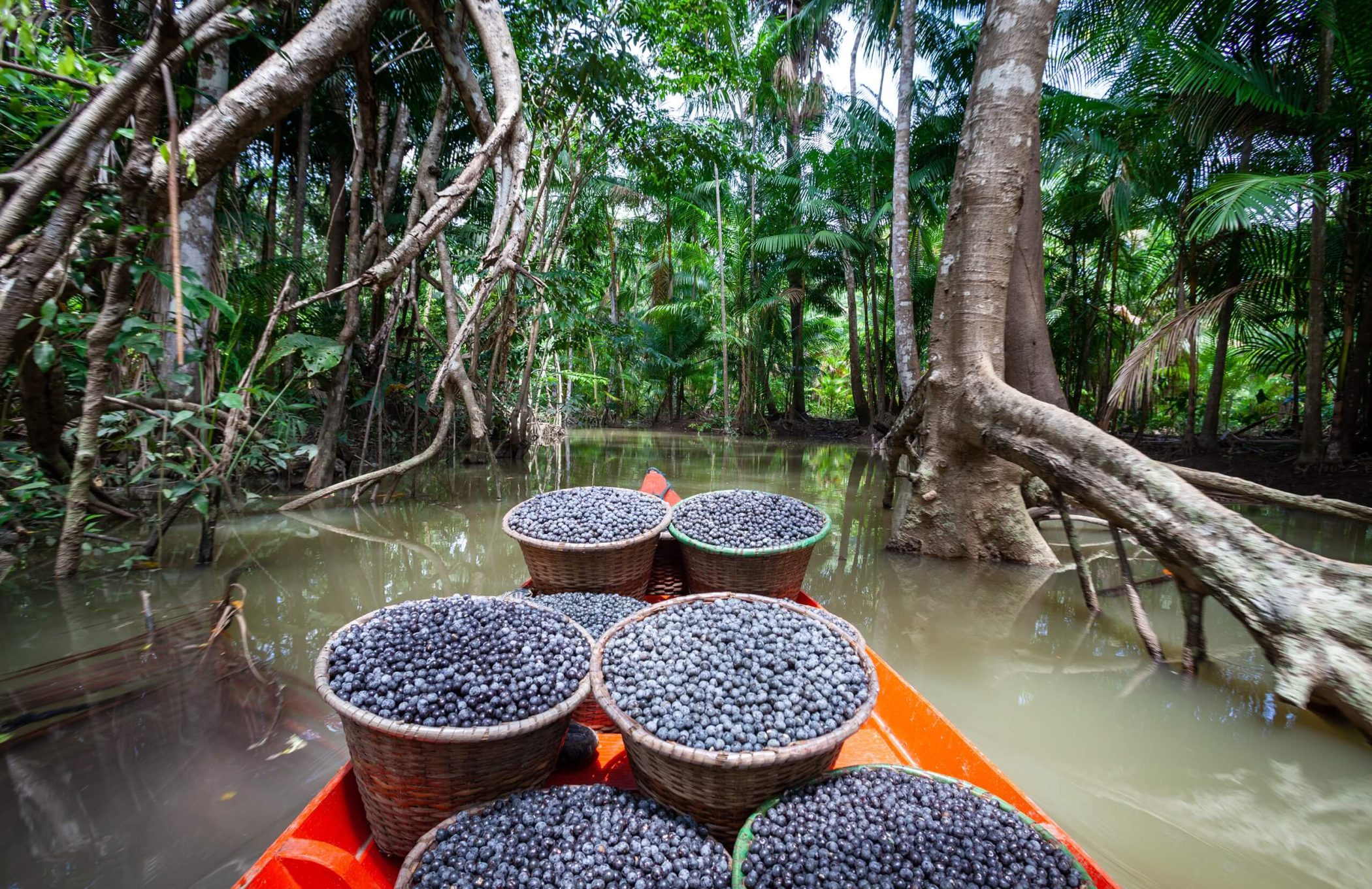
Due to the varied interpretations of the bioeconomy, there are concerns that the concept could be used to further commodify nature for profit and perpetuate existing power imbalances. The stocktake on global bioeconomy writes that “there is no guarantee that the bioeconomy will be equally beneficial to all groups in society; and it may even reinforce or deepen existing gender and social inequalities.” For example, well-intentioned policies to promote the harvest of forest products such as Brazil nuts, açai berries and rubber could “backfire” and result in an increase in environmentally damaging monoculture farming, while smallholder farmers struggle to keep up with bigger operations.
Research from 2023 found a misalignment in discussions on bioeconomy in Brazil between those who advocate for “new paths for national economic development based on scientific and technological advances and industrialization,” and those who “emphasize the need to prioritize social objectives, recognize traditional knowledge, and develop alternative forms of economy in which capitalist profit is not a priority.”
Additionally, competition between the production of food and biofuels could “trigger food insecurity” if there are no clear guidelines on what constitutes bioeconomy-related activities, according to a global review of bioeconomy strategies produced for the G20 GIB. Although this is currently not a problem in Brazil, large-scale biofuel production could pose risks in other countries.
An inclusive approach to the bioeconomy is needed to ensure equitable outcomes
- The term sociobioeconomy has been coined to advance the case for giving equal consideration to people, nature and the economy when developing bioeconomy strategies and investments.
Growing the global bioeconomy in an inclusive way will involve taking into account existing inequalities, such as gender, ethnicity, class, religion and age, and transforming the structures that maintain these inequalities to be more equitable and sustainable. This requires the active involvement of all relevant stakeholders in decision-making processes, from Indigenous and local communities to businesses, academia and government, to ensure equitable outcomes.
To overcome the differing views on what the bioeconomy is, some scholars have suggested using the concept of ‘sociobioeconomy’ instead. This term takes into account the human and biological diversity of the forest economy and prioritises equity and the protection of the rights of Indigenous people and local communities.
This view is shared by the Scientific Panel for the Amazon, which writes that “Amazonian sociobioeconomies are economies based on the restoration and sustainable use of [forests and rivers] in a way that supports the well-being, knowledge, rights and territories of Indigenous Peoples and Local Communities (IPLCs), as well as all residents of the Amazon and the global community.”3Translated from original: “Sociobioeconomias amazônicas são economias baseadas na restauração e no uso sustentável de florestas em pé e rios fluindo saudáveis de modo a apoiar o bemestar, o conhecimento, os direitos e os territórios dos Povos Indígenas e Comunidades Locais (IPLCs, da sigla em inglês), assim como de todos os residentes da Amazônia e da comunidade global.” The approach avoids monoculture production and addresses power asymmetries to ensure that the economy is not just controlled by multinational actors or domestic elites, who have profited from the clearance of forests in the past.
What investments would deliver a strong and equitable bioeconomy?
The concept of a bioeconomy has been applied in many countries, particularly those with a large proportion of forest coverage. Due to the breadth of its definition and the range of perspectives on what constitutes a bioeconomy, there are many approaches to implementing its principles.
Three key approaches with existing models that have been shown to be impactful are detailed below. They are:
- Paying to protect and share genetic resources
- Developing payment systems for ecosystem services
- Directing international finance to the bioeconomy
- Payment for the protection and sharing of genetic resources: a Brazilian example and a global proposal
The Nagoya Protocol, which was signed by 16 G20 countries and came into force in October 2014, is an international agreement to share the benefits of the use of genetic resources in a fair and equitable way. It aims to ensure that those responsible for protecting nature and owners of traditional knowledge are compensated when biological materials from plants or animals are used to develop new products, such as pharmaceuticals or foods.
Many countries have already established a legal framework for this: in Brazil, it is mandatory to register all research or product development projects that use Brazilian species in a database – the National System for the Management of Genetic Heritage and Associated Traditional Knowledge, known as SisGen. When a commercial product is developed from resources listed in the database, 1% of the annual income from retail sales must be given to the local community or paid into a National Benefit Sharing Fund. This fund “is intended to support actions and activities designed to enhance… genetic heritage and associated traditional knowledge and promote its sustainable use.”
As of August 2024, access to genetic plant material has been registered on the SisGen database more than 16,000 times since the start of the year and roughly USD 1.6 million has been collected for the fund.
Globally, sharing the benefits of digital sequence information (DSI) – genetic information stored in a digital form – is being considered at the meeting of the Convention on Biological Diversity (CBD) in October 2024, known as COP16. Currently, companies can use genetic information from online databases without paying for the data. Representatives from the UK and Malawi, who are leading negotiations on the DSI, noted that the “sectors that depend most on DSI generate ‘one to a few trillion dollars annually’” and therefore that just 0.1% of this channelled into a global fund could yield USD 1 billion, which could be given to those who have helped preserve the species.
At COP16, countries will aim to conclude negotiations on who should pay, when and how much they should pay, and whether it should be mandatory or voluntary. Wealthy countries that host many pharmaceutical companies, such as Japan and Switzerland, would prefer a deal that encourages companies to contribute to a fund, without the legal obligation to do so. Following the outcomes of the CBD, it will be up to countries to enforce it, by putting in place their own national regulations and systems to collect payments.
- Payment for ecosystem services: four examples from Latin America and Asia
Payment for ecosystem services programmes are schemes that enable landowners who conserve or restore nature to receive payment for their actions. For example, Mexico’s National Payments for Ecosystem Services Programme offers financial incentives for landowners to conserve forests, protect water basins and promote sustainable land practices. While the programme provides modest grants to communities – around USD 2,400 per km2 of land registered, with a cap of 30 km2 – a recent evaluation found that those participating took on “significantly more forest management activities”, such as patrolling against deforestation, building fire breaks and preventing soil erosion. Funding from the programme is sourced through taxes on water use, government budget allocations and private sector contributions.
In Costa Rica, the Pago de Servicios Ambientales (Payment of Environmental Services) programme, implemented by the environmental ministry, has protected 13,000 km2 of forest via over 19,000 contracts with landowners since 1997. The programme helped Costa Rica become the “only tropical country in the world to have reversed deforestation” according to the World Bank, which has enabled ecotourism to boom. As of 2023, around 5,500 landowners were involved in the programme, covering 3,500 km2 of land. The programme’s annual budget of USD 20 million-25 million is predominantly funded by 3.5% of a sales tax on fossil fuels, as well as from water usage fees and other initiatives.
Payment for ecosystem services programmes can also collect payments from companies that use the services. For example, Vietnam’s Payments for Forest Ecosystem Services scheme mandates that companies, primarily hydropower companies, pay into a state-managed fund for forest restoration upstream.
Similarly, Ecuador has the Fondo para la protección del Agua (FONAG) scheme whereby corporations that need regulated and purified water pay land managers upstream for forest restoration and conservation via a trust fund.
- International financing for the bioeconomy: several dedicated funds exist and more are proposed to increase the share of global investment spent to protect nature
According to the Finance for Biodiversity Initiative, only 3-6% of overseas development assistance (ODA) provided by Multinational Development Banks, around USD 4 billion-9 billion out of a total of USD 150 billion, was spent on activities that “directly lead to biodiversity conservation and restoration”.4These figures refer to expenditure between 2015 and 2017 sourced from the OECD.
Several funding mechanisms have been established or proposed in the past few years as additional measures to finance the bioeconomy. The Amazon Bioeconomy Fund, first implemented in September 2022 and worth just under USD 600 million, has allegedly already avoided 123.4 million tonnes of CO2 emissions. The fund promotes:
- sustainable agroforestry (tree-based agriculture),
- community-led nature tourism,
- native species cultivation and
- aquaculture (growing aquatic animals and plants for food).
In September 2023, Banco do Brasil signed a letter of intent to launch a USD 250 million bioeconomy and climate action financing programme with the Inter-American Development Bank. This aims to “support the development of bio-enterprises and rural producers that are part of the Amazon’s bioeconomy value chains”.
At COP28, Brazil shared a proposal for a Tropical Forest Finance Facility (TFFF) which aims to financially reward countries for preserving tropical forests. The facility would invest funds from rich countries, multilateral development banks and institutional investors, with the returns used to compensate countries for preserving and restoring their tropical forests. Many details still need to be ironed out, with a more detailed design set to be presented at COP29 and a formal launch foreseen at COP30.
This copy was reformatted in February 2026.