
Key points:
- Exposure to air pollution is a well-established public health issue, leading to various health complications from respiratory diseases to impaired cognitive performance.
- Children are particularly vulnerable to the harmful effects of air pollution, which start before birth: maternal exposure to air pollution is linked to a range of adverse birth outcomes, the effects of which extend far beyond infancy, with established causal links to chronic diseases throughout life.
- Over a quarter of preventable global childhood deaths under five from known risk factors are attributable to air pollution. Children under five die from air pollution-related causes at nearly six times the rate of working-age adults.
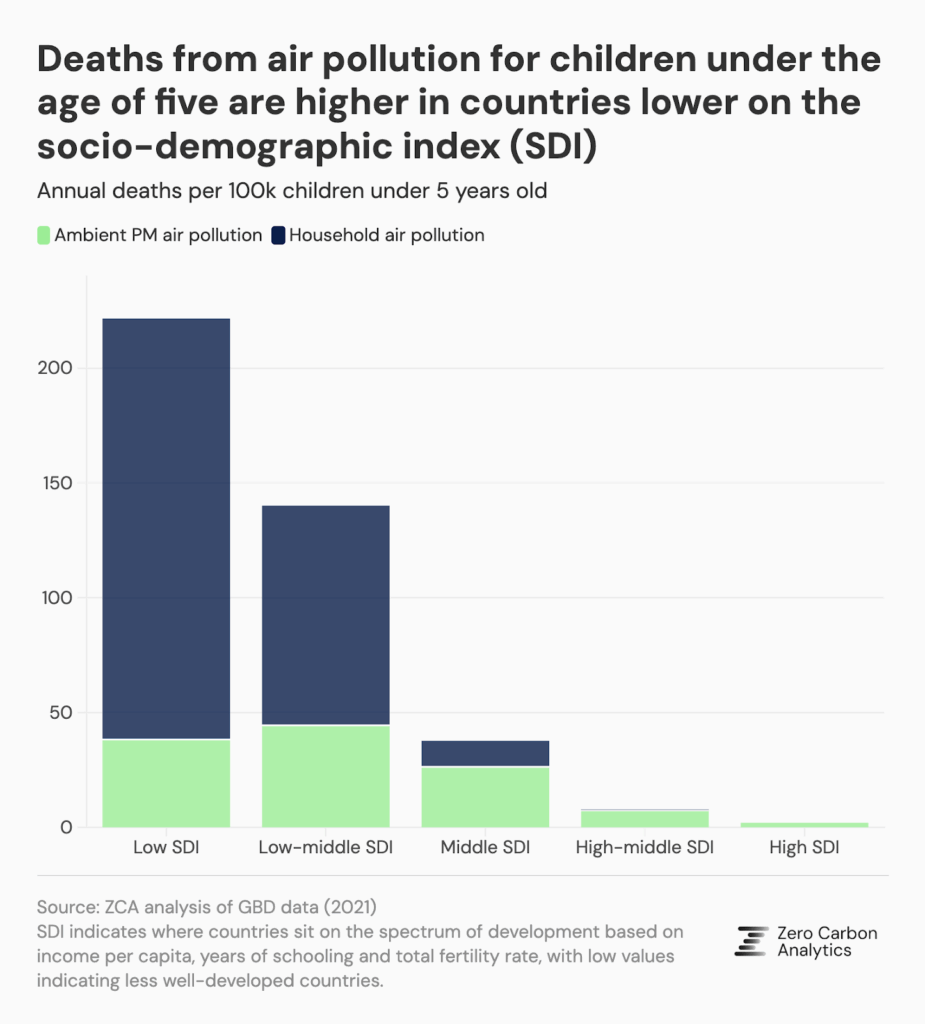
- Children under five in the world’s least-developed countries face air pollution death rates 94 times higher than those in the most-developed nations. Air pollution also disproportionately burdens lower socioeconomic communities, which face higher exposure levels due to residential proximity to pollution sources and greater reliance on polluting fuels.
- The impacts of air pollution stem from structural lock-ins to polluting infrastructure, land-use practices, and economic dependencies on fossil fuels, creating an environmental justice crisis where children bear the greatest burden from systems that simultaneously drive climate change and air pollution through the combustion of solid and fossil fuels.
- Less than 1% of what was spent on subsidising the global consumption of fossil fuels was spent on addressing outdoor air quality between 2018 and 2022.
- We explore four country case studies – South Africa, Brazil, Nigeria and Bangladesh – that illustrate how different structural dependencies result in a devastating burden on children’s health. Breaking these dependencies requires transformative action that addresses energy systems, equitable development and environmental justice.
What is air pollution?
Exposure to air pollution is a well-established public health issue. It affects almost all vital body organs and causes various health complications from headaches to chronic respiratory diseases such as asthma, cardiovascular events such as strokes, cancer and dementia. Burning fossil fuels, including for cooking, heating, transport and industry, is the main source of air pollutants globally.
Air pollution threatens health through two main routes: tiny airborne particles called particulate matter (PM) and reactive gases such as nitrogen dioxide (NO₂), ground-level ozone (O₃) – a major component of smog – and sulfur dioxide (SO₂).
Dangerous airborne particulate matter is classified into three main size categories based on diameter: PM10 (≤10 micrometres), PM2.5 (≤2.5 micrometres) and ultrafine PM0.1 (≤0.1 micrometres).1Particles larger than 10 micrometers generally get filtered out by the nose and upper respiratory tract, so they are less of a health concern. All are inhalable, but smaller particles pose greater health risks because they can penetrate deep into the lungs, enter the bloodstream, and reach vital organs throughout the body.
Coarse particles (PM10) are mainly from wind-blown dust, such as from construction sites and agricultural activities, while fine (PM2.5) and ultrafine (PM0.1) particles originate from combustion sources such as vehicles, power plants and industrial activities, or form secondarily through chemical reactions between gases. Primary sources of NO₂ and SO₂ include fossil-fuel burning power stations, industry and vehicles, whereas ground-level O₃ forms secondarily from NOx (nitric oxide and NO₂) and volatile organic compounds (VOCs, gases that evaporate easily).
Children are at high risk of health impacts from air pollution
Crucially, there is no safe threshold for exposure to these particles. Over 90% of countries exceeded World Health Organization (WHO) limits for PM2.5 in 2023.2A total of 124 (92.5%) out of 134 countries and regions exceeded the WHO annual PM2.5 guideline value of 5 µg/m3, according to the IQAir World Air Quality report. Micrometre reflects the size of the particle, while microgram (µg) is a unit of mass. So µg/m3 is the weight of the particle in a given volume of air (here, a cubic metre), which tells us the concentration of the pollutant in the air.
According to the Global Burden of Disease study, air pollution was responsible for more than 8 million deaths globally in 2021 (the most recent year available), including over 709,000 in children under the age of five, representing almost 9% of global air pollution deaths.3Under-5 mortality is a cornerstone global health indicator (SDG 3.2). Children under five die from air pollution-related causes at nearly six times the rate of working-age adults.4GBD database, accessed 28 September 2025. Values are for 2021. Working age adults here are 20-54 years old. Over a quarter of preventable deaths (27.4%) among children under five from known risk factors – such as malnutrition and unsafe water – are attributable to air pollution.
In the same year, air pollution was also responsible for over 63 million ‘disability-adjusted life years’ (DALYs), which measure years of life lost to premature death and years lived in poor health,5DALYs combine Years of Life Lost (YLLs) due to premature death and Years Lived with Disability (YLDs) from non-fatal health impacts. Children contribute disproportionately to YLLs because when a young child dies, they lose 70+ years of potential life, compared to 5-10 years when an elderly person dies. This amplifies children’s share of the total disease burden from air pollution. We report child DALYs because they capture the lifetime health lost when harm occurs early, which is information that deaths alone cannot show. in children under five. While air pollution kills children at rates similar to the general population (108 vs. 102 deaths per 100,000), the DALY burden for children is more than three times the rate of the general population.6Values are from the Global Burden of Disease (GBD) database, accessed 4 September 2025. Risk factors include ambient PM pollution, household air pollution from solid fuels, ambient ozone pollution and nitrogen dioxide pollution. This is because each childhood death represents 70+ years of lost potential – entire lifetimes of contribution for the economy, community and society.7While mortality rates count deaths equally, DALYs weight them by years lost, showing why preventing a child’s death saves far more life-years than preventing an elderly death.
Of all risks that threaten children’s lives, air pollution ranks as the second deadliest: in 2021, air pollution caused 15% of all deaths from any cause among children under five globally, behind malnutrition.
Despite these impacts, tackling air pollution receives little financial attention. Between 2018 and 2022, an average of USD 3.16 billion was spent globally per year to directly tackle outdoor air quality. This is less than 1% of what was spent over the same period subsidising the global consumption of fossil fuels that is driving climate change and causing air pollution over the same period – USD 593 billion per year.
Factors that make children more vulnerable
Children are particularly vulnerable to air pollution because their immune systems are still developing. Additionally, they have a higher rate of breathing relative to their body size and typically breathe through their mouths, which does not filter air as well as nasal breathing. Furthermore, children’s developing lungs are shaped by the quality of the air that they breathe. Those who chronically inhale pollution tend to have a smaller lung volume.
Exposure to air pollution during prenatal and early childhood periods can have lifelong developmental consequences, as these are critical windows for brain development. Exposure in utero and early childhood has been linked to impaired behavioural functioning and cognitive performance. Reducing outdoor air pollution by 20% could improve a child’s working memory by 6.1% – equivalent to an extra 4 weeks of learning per year.
The effects of air pollution on children start long before birth: maternal exposure to air pollution causes adverse birth outcomes such as low birth weight, preterm birth, and being small for gestational age. One global study found that exposure of pregnant women to PM2.5 pollution may have been responsible for almost 6 million premature births and 3 million underweight babies in 2019.
Growing evidence from systematic reviews – the gold standard of evidence synthesis – confirms ambient air pollution is a major risk factor for these birth complications, making maternal air pollution exposure a critical public health concern with lifelong impacts. The consequences of low birth weight extend far beyond infancy, as poor birth outcomes are causally linked to chronic diseases throughout life, including coronary heart disease, hypertension and diabetes.
Risk aligns with economic disparity
The Lancet Commission on Pollution and Health has consistently found that air pollution mostly kills and harms the poor and vulnerable. Ninety-two percent of pollution-related deaths occur in low- and middle-income countries, which also experience the greatest burden of economic losses from pollution. Children under five in the world’s least-developed countries face death rates from air pollution-related causes 94 times higher than those in the most-developed nations – 1005 children a day versus three children a day – revealing how structural inequalities determine who bears the burden of environmental harm.8GBD database, accessed 28 September 2025. Comparison made between low-SDI countries and high-SDI countries. Low SDI countries include many African countries such as Malawi, Côte d’Ivoire, Ethiopia and others; Middle Eastern countries such as Yemen and Afghanistan; Pacific countries including Timor-Leste, Papua New Guinea and Solomon Islands; Nepal and Haiti. High SDI countries and regions include Australasia, most of Europe, North America, Asian countries such as Japan, South Korea and Singapore, and Middle Eastern countries such as Saudi Arabia, Qatar and Kuwait.
There can also be significant differences in impacts between different socioeconomic groups within countries: children from low-income households face the worst impacts.
In wealthier contexts, stricter standards and access to cleaner technologies have reduced exposure,9Socioeconomic disparities continue to be linked with inequitable exposure to air pollution in high-income countries, such as the US where researchers found lower-income areas had higher exposure to PM2.5 than higher-income areas, and in England where the most deprived neighbourhoods had the highest concentrations of PM10 and NO2. In both countries, as well as others such as the Netherlands, research has pointed to an overlap between these socioeconomic differences and racial inequalities. while research shows that lower-income communities continue to be exposed to greater amounts of air pollution. In many developing regions, children still breathe air polluted by power plants, household fuels, factories and fires. Household air pollution – caused by the inefficient burning of fuels such as wood, coal, crop waste and dung – is the second-largest environmental health risk in low- and middle-income countries, causing almost half of all deaths from lower respiratory infection in children under five (see Figure 1).
Figure 1
Economic dependencies harm children’s health
This pattern of inequitable distribution of risk reflects economic structures that have locked countries and communities into infrastructure, land-use practices and economic dependencies that make polluting pathways hard to escape. The unequal distribution of both air pollution and climate change impacts means this is not only an environmental hazard but a question of justice, with children carrying the burden even before birth.
These economic and environmental lock-ins manifest differently across country contexts – whether communities tied to fossil power, fire-driven land cover change, or polluting industrial processes. The four country case studies below – South Africa, Brazil, Nigeria and Bangladesh – illustrate how different structural dependencies result in a similar devastating burden on children’s health in middle and low-middle socio-demographic index (SDI) countries.10SDI is the socio-demographic index, which indicates where countries sit on the spectrum of development based on income per capita, years of schooling and total fertility rate, with low values indicating countries performing comparatively worse on the index.
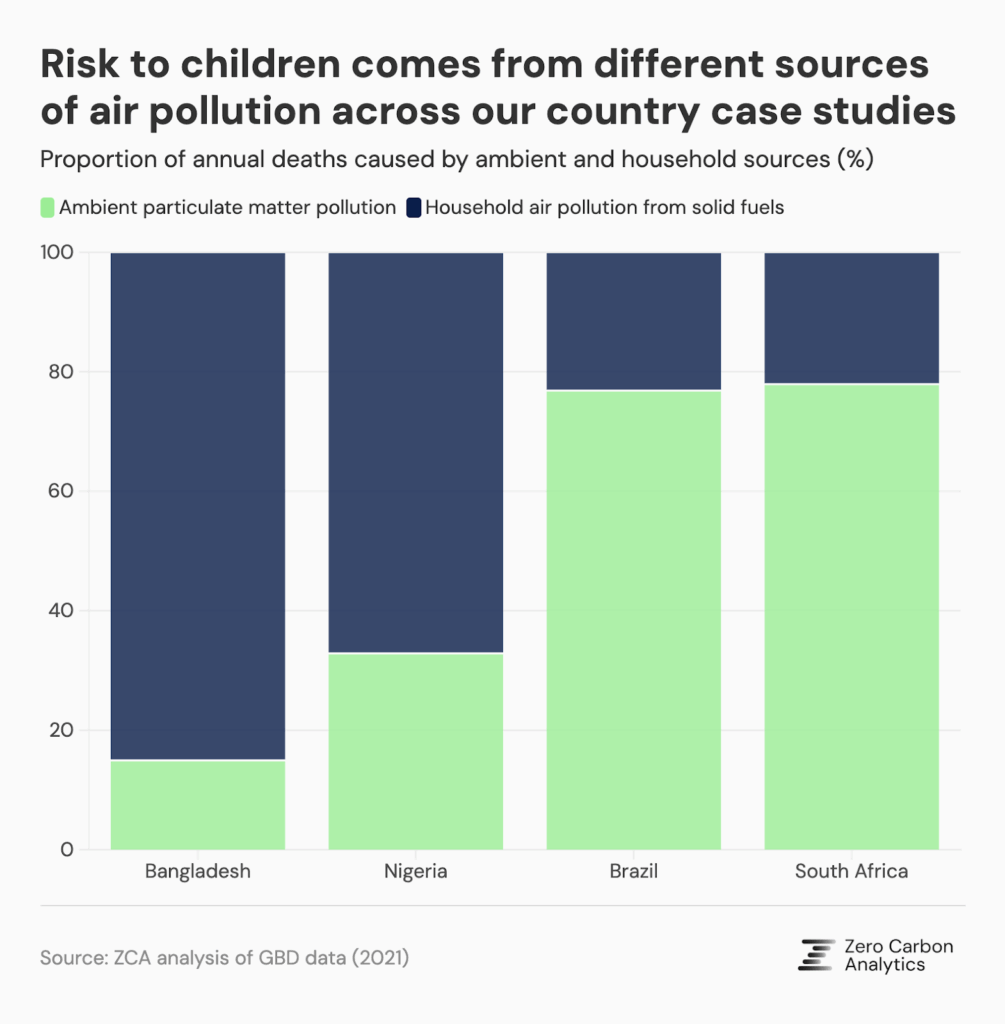
Air pollution is a major – yet context-specific – cause of death in children under five across these four countries (Figure 2). Nigeria’s air pollution health burden (over 300 deaths per 100,000 children) is driven mostly by household air pollution from solid-fuel cooking, with a sizeable contribution from outdoor PM. In 2021, more than 114,000 children under five died from air pollution-related causes – approximately one child every five minutes.
Children in Bangladesh are also heavily affected (133 deaths per 100,000 children). More than 19,000 children under five – or two children every hour – died from air pollution-related causes in 2021, predominantly from household sources.
Reducing exposure to household air pollution through cleaner cooking stoves, better ventilation and reducing the use of solid fuels in these two countries translates to major reductions in child mortality, potentially saving tens of thousands of young lives annually.11These estimates represent upper bounds assuming a linear relationship between exposure reduction and mortality reduction. The actual number of lives saved may differ due to the non-linear dose-response relationship between air pollution exposure and health outcomes. Values are for 2021. In Nigeria, a complete transition to clean cooking could prevent around 76,609 deaths per year, while in Bangladesh, 16,264 child deaths could be prevented. Even a modest reduction of 25% could save up to 19,152 children’s lives per year in Nigeria and 4,066 in Bangladesh.
In South Africa, where air pollution was responsible for 68 deaths per 100,000 children in 2021 (a rate of nine children under five per day), we see the opposite pattern, with most deaths linked to outdoor air pollution exposure.
In Brazil, where almost 1,600 children died in 2021 from air pollution – nearly four children under five per day – outdoor air pollution, including from wildfires and biomass burning, is a major contributor.
Figure 2
Health outcomes in case study countries lag behind their peers
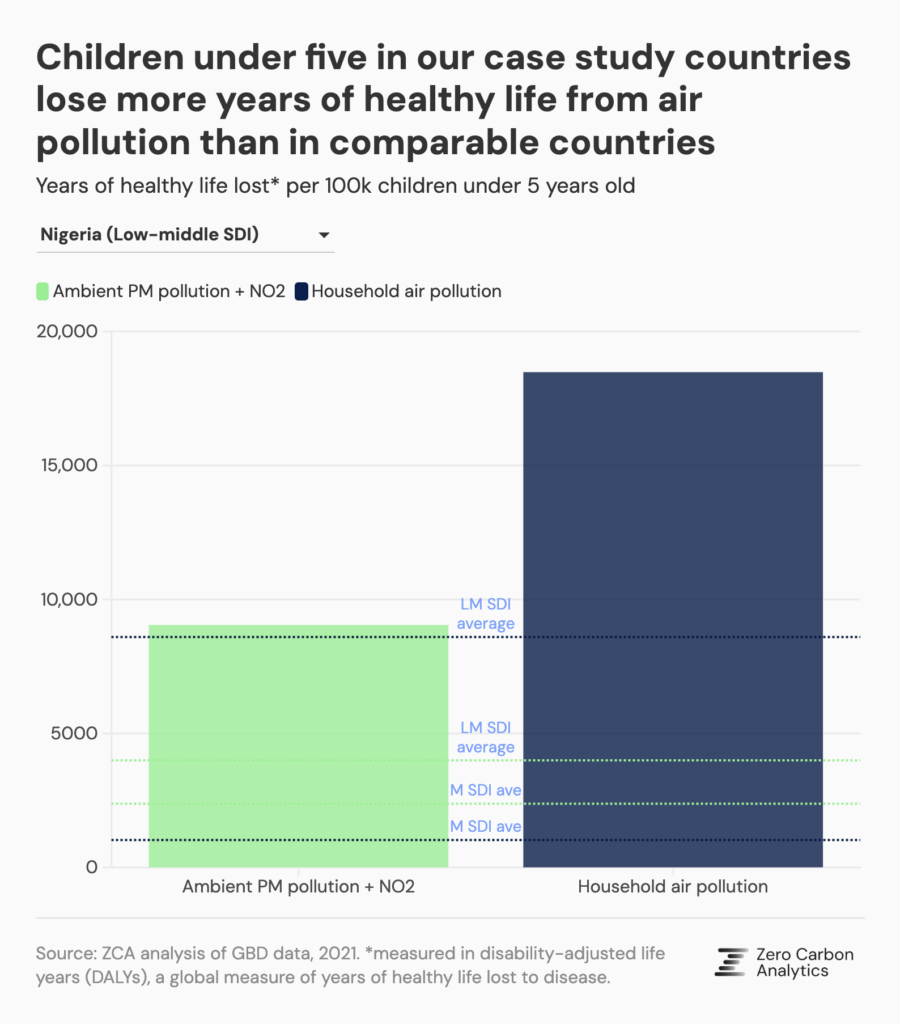
When we examine DALYs, or years of life lost to premature death and years lived in poor health, for children under five, we find that Nigeria and South Africa have higher DALYs from ambient PM pollution than the averages for their respective low-middle and middle SDI countries. For household air pollution, Nigeria, Bangladesh and South Africa all exceed their peer country averages: Nigeria’s DALY rate is more than double that of the low-middle average rate, representing tens of thousands of preventable deaths and millions of years of lost potential (Figure 3).
South Africa’s performance is particularly striking: despite being a middle SDI country, children under five there experience DALY rates from ambient PM that exceed even the average for low-middle SDI countries, meaning South African children face a greater burden of lost healthy years than children in nations lower on the SDI index.
Figure 3
South Africa
Power generation from coal plants is the largest contributor to air pollution in South Africa and is also the single biggest fuel contributor to PM2.5-attributable deaths. The health and economic burdens of South Africa’s energy mix are unevenly distributed, with regions near coal and industrial zones suffering disproportionately. A 10-year study found that people living near coal-fired power stations were 6% more likely to die than their peers elsewhere in the country, while another analysis found that around 800 premature mortalities per year could be attributed to coal-fired power station emissions. Each year, an estimated 9,500 cases of bronchitis are attributable to coal-related air pollution.
Impact on children’s health
Children are directly affected by South Africa’s air pollution. In 2021, South Africa had the eighth-largest number globally of children dying from causes linked to air pollution before their fifth birthday – about 3,365 children. In 2023, exposure to PM2.5 was associated with an estimated 1,300 premature deaths among children under five, according to the Centre for Research on Energy and Clean Air (CREA).
Across South Africa, air pollution also affects pregnancies: PM2.5 exposure is estimated to contribute to ~47,000 underweight births and ~43,000 preterm births annually. One study found that prenatal exposure to PM2.5 nearly doubles the risk of low birth weight babies, with a 94% increased risk for exposed mothers. It also found that lower maternal education (primary school or less) increased preterm birth risk by 170%, and living in lower socioeconomic housing increased low birth weight risk by 70%, highlighting how social determinants compound environmental health risks.
Beyond gestational outcomes, prenatal exposure to indoor air pollution (PM10) showed lasting effects that emerged years later, with children at two years of age displaying reduced neurodevelopmental scores, including lower performance in cognition, language and adaptive behavioural scores (such as social, motor and life skills).
Way forward
South Africa generates approximately 80% of its electricity from coal, but the health costs of air pollution – estimated at USD 52 billion or 14% of GDP – demonstrate that the current coal-dependent system imposes significant hidden economic burdens on the country. A ‘just transition’ away from coal becomes not only an environmental imperative but also an economic opportunity to reduce these health costs and improve the health outcomes for future generations, while protecting the current and future workforce through retraining, economic diversification, and alternative employment in the growing renewable energy sector.
Brazil
Fires are a recurring public health emergency in Brazil. In the Amazon and central regions, 60% of residents are exposed to unsafe air pollution from fires, with young children and older adults particularly affected. Climate change-driven droughts combine with unsustainable land use – mostly forest clearing and biomass burning linked to beef and soy farming – to lengthen the fire season and increase its severity, with severe public health consequences.
Smoke from agricultural burning and wildfires travels hundreds of kilometres – from rural regions such as the Amazon to major cities such as São Paulo – and triggers spikes in respiratory and cardiovascular illnesses. During the particularly bad wildfire season of 2024, hospitalisations for respiratory illnesses rose 27.6% across Brazil compared with the same period in 2023, increasing the cost of care by approximately USD 2.2 million year-on-year. In São Paulo, the number of children diagnosed with respiratory diseases was higher than in previous years, with an approximately 77% increase in the number of children hospitalised for respiratory conditions in September 2024.
Impacts on children’s health
Brazilian wildfires pose serious risks to prenatal health and child development, beyond the respiratory damage described above. Maternal exposure to wildfire smoke during pregnancy significantly increases the risk of adverse birth outcomes: raising the likelihood of preterm birth by 41% in the Southeast and 5% in the North, while the incidence of low birth weight increases by over 18% in the South. PM10 and carbon monoxide exposure have also been linked to lower birth weights in São Paulo. Wildfire smoke exposure during pregnancy also increases the odds of birth defects, such as respiratory anomalies and nervous system defects.
In school children, wildfires have been shown to impair academic performance, as have high levels of PM2.5 and NO₂ around Brazilian schools. An assessment of more than 186,000 schools found that children in public schools were more exposed to air pollutants compared to private schools, as these facilities were likely to be closer to major roads and wildfires.
Way forward
These health impacts are the downstream cost of an export model that relies on land conversion for industrial agriculture, in which prices for the commodities produced rarely reflect the health and climate damages in the regions that make them. Addressing this requires enforceable deforestation-free standards and full traceability across the value chains responsible for land clearing, alongside international climate finance that supports sustainable production and forest protection.
Bangladesh
Bangladesh has one of the worst air quality ratings globally, ranking as the second-most polluted country in 2024. The health of young and unborn children in Bangladesh is greatly affected by ambient urban PM2.5, released by brick kilns and traffic/dust in the dry season, and household smoke from solid-fuel cooking year-round. In 2021, Bangladesh recorded more than 19,000 deaths in children under five as a result of air pollution, and more than 40% of deaths from lower respiratory infections in children under five are attributed to air pollution.12State of Global Air Report, page 22.
Bangladesh’s construction sector relies on inefficient, high-polluting coal-burning kilns to produce bricks, contributing 17% of the country’s annual CO2 emissions and 11% of PM2.5. Rapid urbanisation, caused by climate impacts such as cyclones and rising sea levels that have resulted in the economic collapse of Bangladesh’s coastal regions, has driven the rapid and unsustainable growth of brick kiln operations around major cities like Dhaka.
Impact on children’s health
A 10-year study of children under five in Dhaka found that PM2.5 from brick kilns posed the greatest respiratory threat, with pneumonia risk significantly higher on days when ambient pollution was dominated by brick kiln emissions. A study looking at hospital emissions in Dhaka between 2020 and 2024 identified children under four as one of the most vulnerable groups, accounting for 28% of all PM2.5-related respiratory admissions,13This is a preprint; the final published version may differ. despite representing a smaller portion of the population. During this time, Dhaka’s annual PM2.5 levels averaged 75-80 µg/m³ – far exceeding WHO guidelines – with every 10 µg/m³ increase in PM2.5 resulting in a 5.9% increase in respiratory admissions (primarily pneumonia and acute bronchitis) in children aged 0-4, with effects peaking 1-3 days after exposure.
As well as industrial air pollution from kilns, Bangladesh also experiences high rates of household air pollution. It has the lowest access to clean cooking technologies in Southeast Asia. Household cooking smoke from burning solid fuels such as wood, dung and coal drives intense indoor exposure, especially for pregnant women and infants who spend most of their time at home, raising risks for adverse birth outcomes and respiratory infections.
Mothers using high-polluting cooking fuels were 2.6 times more likely to have low birth weight babies compared to those using cleaner fuels such as electricity or gas. Another analysis found that infants and newborns were 2.93-3.78 times more likely to die compared to those of mothers using clean fuels – with the odds of newborn death increasing to 4.33 times higher when solid fuel cooking happened in living areas where there is poor ventilation.
This is supported by a separate analysis that found that indoor cooking significantly increased health risks, raising the odds of neonatal mortality by 25%, infant mortality by 18%, acute respiratory infections by 18%, and low birth weight by 25% compared to outdoor cooking. Regardless of cooking location, solid fuel cooking was found to increase pregnancy complications by 36%. Further, children aged 3-5 years exposed to solid fuels were found to be 47% more likely to have developmental delays than children who were not exposed to this pollution.
Way forward
The scale of these health impacts makes it clear that protecting children’s health will require accelerating Bangladesh’s transition to cleaner cooking and industrial technologies. Cleaner kiln upgrades in Bangladesh show benefits that exceed costs: studies estimate large health-cost savings from reduced PM2.5 alongside CO2 cuts.
Nigeria
Oil wealth in Nigeria has paradoxically hindered development despite generating substantial revenues. The world’s sixth-largest global exporter of oil, Nigeria continues to have high poverty rates, inadequate infrastructure, unreliable electricity and persistent underdevelopment stemming from poor political governance. Economic dependence on oil extraction – with more than 80% of export earnings tied to oil in 2024 – perpetuates polluting activities, while also failing to invest in cleaner alternatives, trapping communities in cycles of environmental and health harm.
In Lagos, road transport, industrial emissions and generators are the top three sources of PM2.5. Lack of alternative transportation options has led to the city hosting some of the world’s heaviest vehicle traffic, dominated by older vehicles using high-sulfur fuels and outdated emissions technology. Additionally, an unreliable electricity grid forces widespread reliance on diesel generators by both businesses and households. Indoor air pollution is also a problem, especially in rural areas where access to electricity and clean cooking is particularly low.
Impact on children’s health
Hospital admissions in Lagos of children with respiratory illnesses have been found to increase during high-traffic periods. Lower respiratory infections from PM2.5 emissions are the leading cause of death in children under the age of five, accounting for around 60% of deaths and 78% of all air-pollution-related pneumonia deaths.14In 2019.
A study of preschool children in Nigeria found that elevated carbon monoxide (CO) levels in the blood significantly impaired multiple aspects of child development. For every 1% increase in blood CO levels, children experienced statistically significant reductions in gross motor skills (1.4%), fine motor skills (1.2%) and problem-solving abilities (2.3%).
Only 26% of Nigeria’s population has access to clean cooking equipment. A study found that solid fuel use for cooking significantly increased the risk of death in older infants and children. Solid fuel use was linked to 43% of post-neonatal deaths (1-11 months) and 36% of child deaths (1-5 years). Children in households that rely on solid fuels face nearly twice the death risk during the post-neonatal period and a 63% higher risk during the child period. Lower socioeconomic status is linked to higher under-five mortality from solid fuel use. One study projects that under a scenario that assumes no specific policies to increase access to clean cooking technologies, there could be 32,500 more deaths in children under five per year by 2060.15Compared to 2018 levels.
Operations of the oil and gas sector also have a direct impact on children’s health. A study of Nigerian oil spills – which occur frequently in populated areas along pipelines and cause the release of dangerous air pollutants – found that exposure before conception dramatically increases neonatal mortality by 38.3 deaths per 1,000 live births – roughly doubling the death rate. Gas flaring – whereby gas emitted from oil wells is burnt off, a practice used extensively in Nigeria – increases respiratory symptoms in children, including a 22% increase in cough incidence, and also raises the incidence of stunting and underweight children.16This analysis lacks control variables, so the causal attribution should be interpreted with caution.
Way forward
Nigeria’s concerning child health indicators make a strong case for an accelerated just transition that can simultaneously address environmental health burdens and economic development needs. A successful just transition would break Nigeria’s structural lock-in to polluting pathways while building a more diversified, equitable economy with universal access to low-carbon energy.